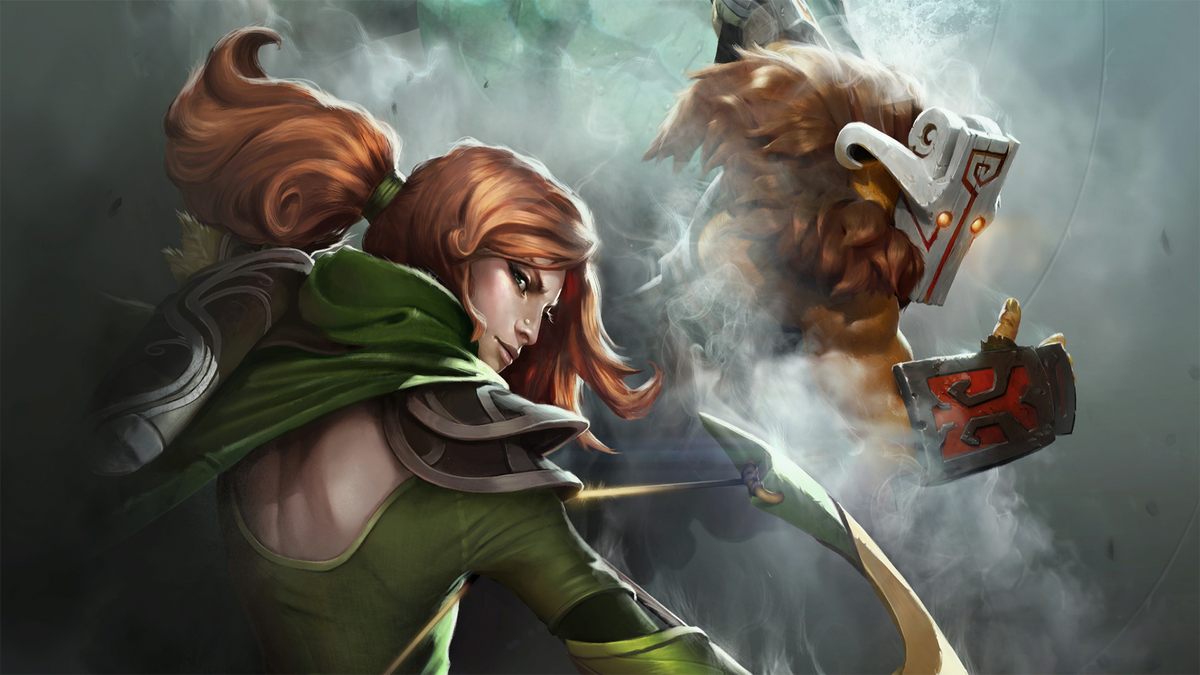
To learn how to play Dota 2 in 2026, start in Turbo Mode or against bots, pick a simple beginner hero like Wraith King, Crystal Maiden, or Lich, and focus on last hitting creeps before worrying about anything else. Patch 7.41 also removed the Facets system, which cut out one of the most confusing choices new players used to face when picking a hero.
Dota 2 has a reputation for being one of the hardest games to learn on PC, and that reputation isn't entirely wrong. There are well over a hundred heroes, a deep item system, and a map that rewards knowledge most new players simply don't have yet. What's changed is that Valve has spent the last couple of patches actively trimming down the complexity that used to scare people off before they even finished their first match.
If you're trying to figure out how to play Dota 2 without getting overwhelmed, this practical, no fluff beginner's guide covers the basics you need to know, the easiest heroes to start with, and a handful of Dota 2 tips for new players that will save you a rough first few weeks.
What Changed in Dota 2 That Makes 2026 a Good Time to Start?
The current patch, 7.41d, followed a bigger structural update in March that removed the Facets system entirely. Facets used to force players to pick between different skill variations on a hero before every match, which added an extra layer of decision making that mostly just confused people who hadn't played the hero enough to know what each option even did. Cutting that out means new players can focus on learning a hero's core kit without an extra menu of choices standing in the way.
The meta still shifts constantly with balance patches, so don't get too attached to any single hero being strong forever. What matters more for a beginner is picking heroes with simple, forgiving kits that still teach you good habits, which is exactly what the next section covers.
Understanding the Basics: Roles, Lanes, and the Map
Every Dota 2 match has five roles split across two teams. The carry farms gold early and becomes the team's main damage source late game. The mid laner gets a lane to themselves and usually snowballs fastest. The offlaner holds a tougher lane alone and focuses on survivability and initiation. The two support roles, often called soft support and hard support, buy wards, protect teammates, and set up kills instead of farming for themselves.
The map itself is split into three lanes, a jungle on each side full of neutral creeps you can farm, and each team's base built around an Ancient that has to be destroyed to win. You don't need to memorize every detail of the map right away. Just knowing which lane you're supposed to be in and where the nearest tower is will get you through your first several games without too much confusion.
Best Dota 2 Heroes for Beginners by Role
Some heroes are just easier to have an impact with while you're still learning. Here are the best Dota 2 heroes for beginners across every role:
- Wraith King (Carry): Farm, fight, and press your ultimate for a built-in second life
- Phantom Assassin (Carry): Simple critical strike mechanics with solid defensive tools
- Sniper (Carry): Ranged damage dealer built around straightforward positioning
- Viper (Mid): Right-click, slow the enemy, repeat
- Tidehunter (Offlane): Farm, walk into the fight, press Ravage
- Bristleback (Offlane): Tanky and forgiving, punishes enemies for attacking you
- Crystal Maiden (Support): Easy stuns and a global aura that helps your team just by existing
- Lich (Support): Frost Blast, Frost Shield, Chain Frost, and you're done
- Ogre Magi (Support): Tanky and built around one strong button
- Lion (Support): Two disables, a mana drain, and a reliable nuke ultimate
Every Dota 2 match splits into carry, mid, offlane, and two support roles, each with a distinct job on the map.
How to Actually Learn the Game Without Getting Crushed
Jumping straight into a normal ranked match as a brand new player is one of the fastest ways to have a miserable time. A few smarter starting points make the learning curve much more manageable:
- Play a handful of matches against bots first to get comfortable with the interface and controls
- Use Turbo Mode to practice hero mechanics in shorter, faster paced matches before jumping into standard length games
- Stick to one or two heroes at a time instead of trying something new every single match
- Watch a replay of your own worst game every so often to spot habits you didn't notice while playing
- Communicate with pings instead of chat if you're not sure how your team will react to typed callouts
Essential Items and Mechanics New Players Should Learn First
Last hitting, which means getting the killing blow on enemy creeps for gold, is the single most important mechanic to practice early. Denying, or killing your own low health creeps to stop the enemy from getting gold and experience off them, is the other half of that skill and just as important once you've got the timing down for last hits.
Beyond that, a few basics go a long way. Buy wards to give your team vision of the map, especially in the early game when picking fights blind is how most deaths happen. Keep your courier busy shuttling items back to you instead of walking to base yourself. Pick up a Town Portal Scroll as soon as you can afford one, since it lets you get back to defend your base or rejoin a fight without wasting minutes running across the map. None of this needs to be perfect on day one. It just needs to become a habit over your first few dozen games.
How to Get Better at Dota 2 Once You've Got the Basics Down
Once last hitting and basic map awareness feel natural, the fastest way to keep improving is picking one role and sticking with it for a while instead of bouncing between all five. Specializing lets you build real muscle memory around itemization and decision making for that specific role, which pays off a lot faster than being mediocre at everything.
It's also worth paying attention to your behavior score before jumping into ranked matches. Toxic games early on can affect your matchmaking experience down the line, so playing clean, communicating reasonably, and avoiding tilt in your first several weeks sets you up better long term. Dota 2 has remained one of the most played Steam games for over a decade for a reason, and once the basics click, it's easy to see why people put thousands of hours into it. If you're looking for other games with that same kind of long term depth, our list of games worth every hour of your time is worth a look too.
Should You Play Ranked Right Away?
Not immediately. Give yourself a stretch of unranked and Turbo matches first, ideally until last hitting feels automatic and you've got two or three heroes you're comfortable with. Ranked in Dota 2 tends to attract players who expect a certain baseline of map awareness, and jumping in too early usually just means a rough string of losses that doesn't actually teach you much. If you enjoy team based games with their own hero pool and meta to learn, our Marvel Rivals tier list for ranked climbing covers a lot of the same principles from a different genre.
Frequently Asked Questions
The best way to learn how to play Dota 2 is to start against bots or in Turbo Mode, pick one simple hero like Wraith King or Crystal Maiden, and focus entirely on last hitting creeps before worrying about anything else.
Wraith King, Sniper, Viper, Tidehunter, Crystal Maiden, and Lich are all considered some of the best Dota 2 heroes for beginners thanks to their simple, forgiving kits.
It has a steeper learning curve than most, mainly due to its item system and hero count, though recent patches like the removal of Facets have made it noticeably easier for new players to get started.
Pick one role and stick with it, review your own replays regularly, and keep your behavior score clean before moving into ranked matches.
Turbo Mode is a faster paced version of Dota 2 with boosted gold and experience gain. It's a great way for beginners to practice hero mechanics without committing to a full length match.
Check out more top 10 lists, rankings, and guides from Cubold Gaming.
Explore More Rankings →
