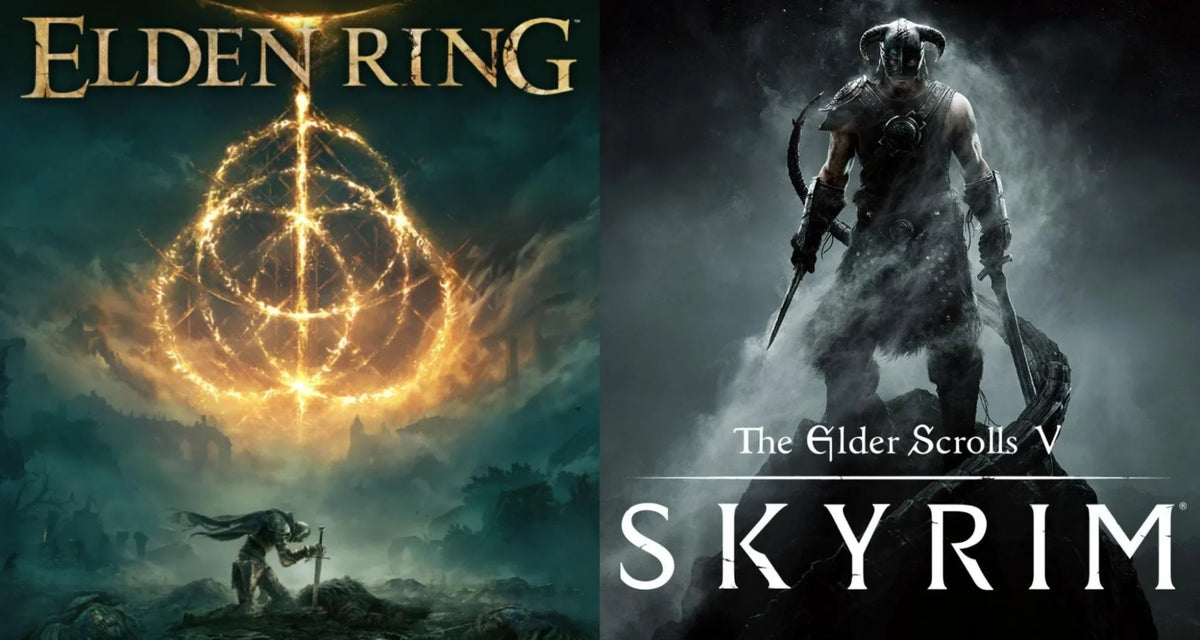
Elden Ring wins on visual design and it is not close. Skyrim wins on weapon identity, because a Daedric artifact belongs to a god and you know which one. Baldur's Gate 3 wins on mechanical design, where the interesting part is what a weapon lets you do rather than what it looks like. Three different definitions of good, and each game is best at one of them.
Comparing RPG weapon design across these three is harder than it looks, because they are not trying to do the same thing. One is a tactical adaptation of a tabletop ruleset, one is an open world where you forge your own gear, and one is an action game where every weapon is a sculpture first.
Ask which has the best RPG weapon design and the honest answer depends entirely on whether you mean how weapons look, what they mean, or what they do. Judging all three by a single standard produces a useless result, so this compares them across all three and then picks an overall winner anyway.
Fair warning on the conclusion: one of these games is genuinely better at this than the other two, but not for the reason most people assume.
How Do You Judge Weapon Design in an RPG?
These are the criteria used throughout, and they are worth naming because most arguments about RPG weapon design collapse when two people are silently using different ones.
- Visual identity, meaning you can recognize a weapon from its outline
- Narrative weight, meaning the weapon came from somewhere specific
- Mechanical distinctiveness, meaning it changes how you play rather than just your numbers
- Memorability, meaning you can still name it years later
- Coherence, meaning the arsenal feels like it came from one world
Skyrim, Elden Ring, and Baldur's Gate 3. Twelve years apart at the extremes, which matters when comparing visual fidelity but not when comparing design thinking.
Baldur's Gate 3: Design Through Rules
Baldur's Gate 3 inherits its approach to RPG weapon design from Dungeons and Dragons, and that shapes everything. A weapon here is defined by its text box far more than its model. What matters is the rider effect, the reaction it grants, or the roll it changes.
Where It Wins
The legendary weapons are mechanically the most inventive of the three games by a wide margin. Bloodthirst reduces the number you need to roll for a critical hit by one, which quietly reshapes an entire build. Duelist's Prerogative grants an extra reaction every turn. Nyrulna is a thrown trident that returns to your hand and detonates in thunder. The Orphic Hammer is not really a weapon at all, it is a key that unlocks an alternate ending.
That last one is the strongest single example. A weapon whose most important property is narrative rather than combat is something the other two games never attempt.
Where It Falls Short
Visually it is the weakest of the three, and that is partly a camera problem. In an isometric view a weapon is a few dozen pixels most of the time, so there is little incentive to sculpt detail nobody will see. Most BG3 weapons look like well made versions of standard fantasy shapes rather than distinctive objects. Plain, functional profiles like a Crusader's Blade replica are roughly the visual register the whole arsenal sits in.
Paired weapons are where it gets closest to visual character, since dual wielding is mechanically central and the game leans into it. Compact paired shapes such as dual club style props read far better at a distance than a single blade does, which is a lesson the game applies inconsistently.
Skyrim: Design Through Mythology
Skyrim's answer to RPG weapon design is ownership. The best weapons in the game are Daedric artifacts, and every one of them belongs to a specific god with a specific personality. That single structural decision does more work than any amount of sculpting.
The Artifacts Carry the Game
Dawnbreaker is Meridia's, deals fire damage, and makes undead explode into blue flame. Volendrung is Malacath's warhammer and absorbs stamina with every hit. The Mace of Molag Bal traps souls if the target dies within three seconds. Mehrunes' Razor, belonging to Mehrunes Dagon, has a small chance to kill instantly regardless of anything else. The Ebony Blade absorbs health and grows stronger as you kill people who trusted you, which is the most Mephala thing imaginable.
Notice how each effect matches its owner. That is the design principle, and it is why people still name these weapons fifteen years later. Blunt Daedric weapons in particular have enormous presence, and a heavy asymmetric shape like a Gendry Baratheon's Warhammer shows how much a warhammer silhouette carries even without a god attached to it.
The Crafting Problem
Skyrim's weakness is self inflicted. Smithing and enchanting let you build a weapon that outperforms every artifact in the game, which means the mythologically significant items become obsolete. A god's personal weapon losing to a crafted dagger is a design contradiction the game never resolves.
Visually it also shows its age. The tiered progression from iron up to Daedric is coherent, but individual weapons within a tier are largely identical, so most of the arsenal has no identity at all.
Skyrim tells you who owned a weapon. Elden Ring shows you what it was made from. Baldur's Gate 3 tells you what it lets you do. All three are valid, and only one of them survives a screenshot.
Elden Ring: Design Through Silhouette
Elden Ring treats RPG weapon design as sculpture, and it is the only one of the three where the model is the primary carrier of meaning. The Blasphemous Blade has a face worked into the metal with molten channels running through it. The Grafted Blade Greatsword is visibly dozens of separate swords fused together. The Bolt of Gransax looks grown rather than forged.
Why It Wins on Visuals
Every one of those descriptions is something you can see without reading anything. That is the highest bar in weapon design and Elden Ring clears it repeatedly rather than occasionally. The third person camera helps, since the weapon is on screen constantly and large enough to reward detail, but plenty of third person games waste that opportunity.
The Dark Moon Greatsword is the clearest case of visual and narrative design converging, since the translucent fractured blade is the story. Cool toned magical blades depend on exactly that combination of shape and edge highlighting, which is why a Moonlight Greatsword replica works as a physical object where a purely enchanted weapon would not.
Where It Loses
Mechanically it is the least inventive of the three. Weapon behaviour is largely defined by class movesets and Ashes of War rather than by the individual weapon, so two greatswords with wildly different models often play near identically. Nothing in the game does what Bloodthirst or the Orphic Hammer do.
Its lore is also famously indirect. You can love a weapon's look for a hundred hours without ever learning where it came from, whereas Skyrim tells you in the first sentence of the quest.
Head to Head
| Criterion | Winner | Why |
|---|---|---|
| Visual identity | Elden Ring | Recognizable from silhouette alone |
| Narrative weight | Skyrim | Every artifact belongs to a named god |
| Mechanical design | Baldur's Gate 3 | Effects that reshape builds and endings |
| Arsenal coherence | Elden Ring | Everything looks made by the same world |
| Memorability | Tie, Skyrim and Elden Ring | Named artifacts versus striking models |
| Biggest weakness | All three | Crafting, camera, and moveset uniformity |
The Verdict
Elden Ring takes it, but the reason matters. It does not win because its weapons are prettier. It wins because visual design is the only one of the three approaches that works without the game running.
Bloodthirst's critical hit modifier is brilliant and completely invisible in a screenshot. The Ebony Blade's growth mechanic is thematically perfect and requires a paragraph to explain. The Blasphemous Blade needs neither, because you look at it and understand. That portability is what makes a design outlive its game, and it is the strongest argument in any discussion of RPG weapon design.
Skyrim finishes second in this RPG weapon design comparison on the strength of its artifacts, held back by a crafting system that makes them irrelevant. Baldur's Gate 3 finishes third here while being the best designed game of the three overall, which is a reminder that weapon design is one department rather than the whole product.
What Each Game Teaches About Physical Design
There is a practical takeaway from all this RPG weapon design theory if you are choosing a replica rather than settling an argument. Weapons designed the Elden Ring way translate to physical objects almost directly, because the shape was always doing the work.
Skyrim's artifacts translate well too, but for a different reason. They are ornate, distinctive, and asymmetrical enough to be interesting from any angle. A bright ornate blade with a decorative guard, in the register of an Alice's Sword replica, is roughly what a Dawnbreaker build looks like in practice.
Baldur's Gate 3 weapons mostly do not translate, and that is not a criticism of the game. A weapon whose entire identity is a rules interaction has nothing to reproduce physically. That is the clearest evidence that these three games really are solving different problems.
Frequently Asked Questions
Elden Ring, comfortably. Its weapons are built to be recognized from silhouette alone, and the arsenal is coherent enough that everything looks like it came from the same world.
Because each one belongs to a specific Daedric Prince and its effect matches that god's personality. Volendrung drains stamina for Malacath, the Ebony Blade rewards betrayal for Mephala, and Dawnbreaker burns undead for Meridia.
The Orphic Hammer, since its main function is unlocking an alternate ending rather than dealing damage. Mechanically, Bloodthirst is the most build defining, because it lowers the roll needed for a critical hit.
It undercuts it. Smithing and enchanting let you produce gear that outperforms Daedric artifacts, so weapons with enormous narrative significance end up mechanically irrelevant on most playthroughs.
Elden Ring first, because the design lives in the shape. Skyrim second, since the artifacts are ornate and distinctive. Baldur's Gate 3 last, as most of its best weapons are defined by rules text rather than by their models.
Browse high density foam greatswords, blades, and hammers built at display scale and light enough to mount on any wall.
Shop Weapon Replicas →
