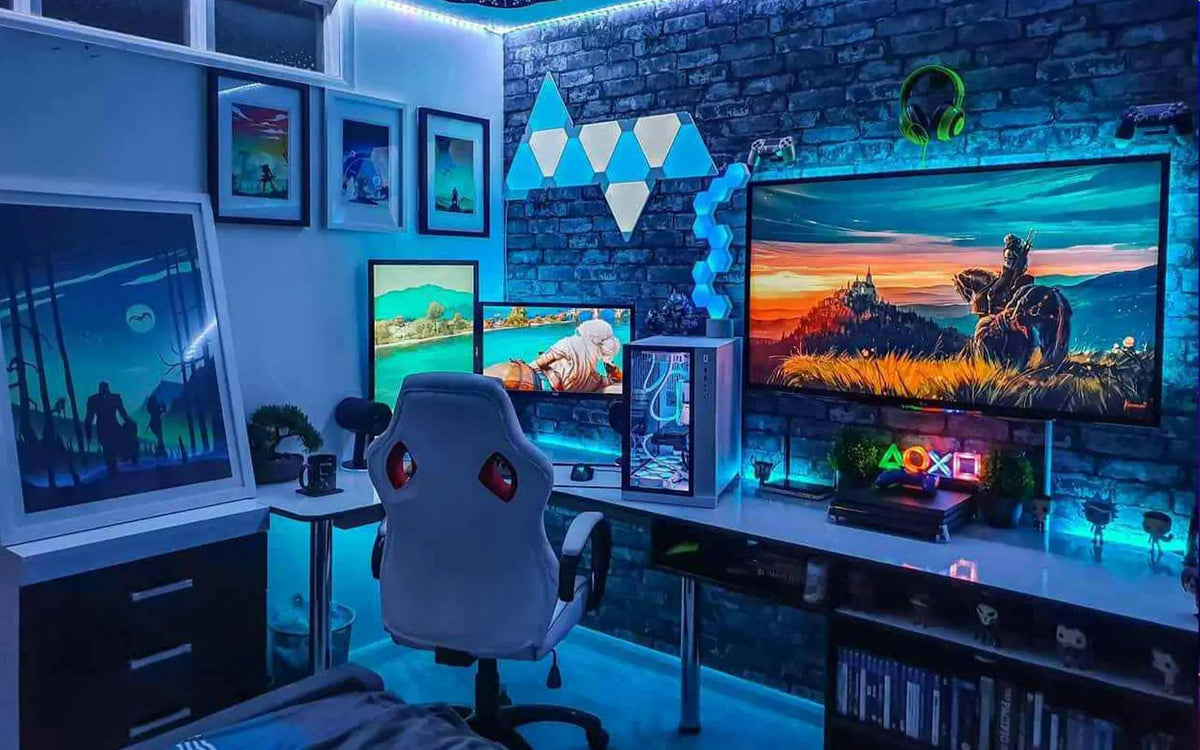
A standout gaming room comes down to three things: a clean, functional setup, intentional lighting, and gaming room display ideas that reflect what you actually care about. You don't need a big budget. You need a clear vision and some patience building toward it.
Most gaming rooms look the same. A desk pushed against a wall, a monitor or two, a chair, and a pile of controllers that don't have a real home. There's nothing wrong with that setup functionally, but it doesn't feel like anything. It doesn't say anything about the person who plays there.
Building a gaming room that actually stands out requires thinking about it the way you'd approach any space you want to spend real time in. What's on the walls matters. How the light hits the room at night matters. Where your collection lives and how it's presented matters. None of these things need to cost a fortune, but they do require actual decisions rather than whatever ended up happening by default.
This guide walks through everything, from setup fundamentals to gaming room display ideas that work in small spaces and large ones, so you can build something worth showing off.
Start With the Setup Before the Aesthetics
The most visually impressive gaming rooms still fall apart if the core setup doesn't work. Before thinking about gaming room display ideas, get the desk, chair, monitor positioning, and cable situation under control. A room that looks great in photos but is uncomfortable to sit in for three hours isn't a good gaming room. It's a prop.
Monitor height should put the top of the screen at or slightly below eye level when you're seated. Most people run their monitors too low, which causes neck fatigue over long sessions. A monitor arm solves this, opens up desk surface area, and looks significantly cleaner than a factory stand. Cable management comes next. Routed cables, a cable spine behind the desk, or even a simple cable box under the desk makes the space look more intentional without requiring any significant investment.
Once the functional layer is handled, the decorative layer has something to build on. Gaming room display ideas layered on top of a chaotic setup never quite work because the underlying disorder undermines everything around it.
There are over 3.3 billion active gamers worldwide, and dedicated gaming spaces have grown from a niche hobby into a mainstream part of how people set up their homes.
Lighting: The Fastest Way to Transform Any Gaming Room
Lighting does more work in a gaming room than almost anything else and it's consistently one of the most underutilized tools in the space. Overhead lighting alone flattens a room and creates glare on screens. Layered lighting, combining ambient, task, and accent sources, creates depth and makes the space feel designed rather than assembled.
Bias Lighting Behind the Monitor
Bias lighting is a strip of LEDs mounted behind your monitor that illuminates the wall behind it. It reduces eye strain during long sessions by creating contrast between the screen and the surrounding wall, and it looks excellent in almost any setup. Color temperature matters here. Warmer tones create a more relaxed atmosphere, while cooler colors give the room a more technical feel. Either can work depending on the aesthetic you're going for.
Accent Lighting for Display Areas
Display shelves and collection pieces look dramatically better with dedicated lighting. Small LED strip lights mounted inside or underneath shelves cast light directly onto the items displayed there, making them feel intentional and elevated rather than just placed. This is one of the most effective gaming room display ideas for collectors because it transforms a shelf of figures or replicas from storage into something closer to a proper exhibit.
Smart Bulbs for Ambient Control
Replacing standard bulbs in floor lamps or wall fixtures with smart bulbs gives you control over the room's mood without running additional wiring. Being able to shift from bright white light for setup and maintenance tasks to a dimmer, colored ambient for gaming sessions makes the room feel more versatile and considered. It's a small change that makes a noticeable difference every time you sit down to play.
Gaming Room Display Ideas That Actually Work
This is where personal taste drives most of the decisions, but a few principles apply broadly regardless of what you're displaying or what your collection looks like.
Wall-Mounted Weapon Replicas and Props
Larger replica props like swords, shields, or oversized weapons work best mounted on walls where they become part of the room's architecture rather than items competing for shelf space. Horizontal mounts for swords, angled brackets for axes, and purpose-built display boards for multiple pieces create focal points that anchor the room's visual identity. This is one of the gaming room display ideas that tends to generate the most immediate reaction from anyone who walks in, because a well-mounted weapon replica on a clean wall is hard to ignore.
Floating Shelves for Figures and Collectibles
Floating shelves give you flexibility to arrange and rearrange as your collection grows without committing to a single configuration. Grouping items by franchise, aesthetic, or color creates visual cohesion and makes even a small collection look curated. Leaving deliberate empty space between items rather than packing shelves completely gives each piece room to breathe and makes the display feel intentional. Overcrowded shelves read as storage. Spaced shelves read as a collection.
Framed Art and Posters
Game art framed properly is one of the most impactful and budget-friendly gaming room display ideas available. A quality frame transforms a poster print into something that looks like it belongs in a gallery rather than a college dorm. Black frames on white or light walls work in almost any room and give game artwork a clean, graphic quality that flatters the source material. Grouping three or four pieces from the same franchise or artistic style as a cohesive wall section creates more visual impact than scattering individual prints across different walls.
Controller and Console Display
Controllers and consoles are functional objects that also work as display pieces with the right approach. Wall-mounted controller holders turn peripherals that normally live in a pile into part of the room's visual identity. Limited edition controllers in particular deserve to be seen rather than buried in a drawer. Acrylic display stands for consoles elevate them literally and visually, signaling that these objects matter to the person who owns them.
The gaming rooms that stand out aren't the ones with the most gear. They're the ones where every decision, from the lighting to what's on the walls, was made on purpose.
Display Ideas by Budget
Good gaming room display ideas don't require a renovation budget. Here's how to approach the space at different spending levels.
| Budget Level | Display Ideas | Lighting Approach | Biggest Impact Move |
|---|---|---|---|
| Under $50 | Framed posters, cable management | LED bias strip behind monitor | Clean cables, one framed print |
| $50 to $150 | Floating shelves, controller mounts | Shelf accent strips, smart bulb | Shelf display with accent lighting |
| $150 to $400 | Wall mounts for props, monitor arm | Full layered lighting setup | One statement wall-mounted piece |
| $400+ | Glass display cabinet, custom panels | Addressable LED, smart scene control | Dedicated collection display zone |
Making a Small Gaming Room Work
Limited square footage doesn't limit what you can do with gaming room display ideas. It just shifts where the display opportunities live. Small rooms benefit from vertical thinking: going up with shelving and wall mounts instead of out with floor-standing pieces keeps the floor clear and the room feeling open.
A corner desk maximizes the available workspace without eating the whole room, and positioning it to face the door rather than a wall changes the feel of the space significantly. Mirrors placed strategically add perceived depth to smaller rooms and can double the visual impact of lighting setups placed near them.
Editing your collection down to a curated selection is another approach that works particularly well in smaller spaces. Displaying fifteen items well looks more impressive than fifty items crammed into the same footprint. Rotating pieces in and out keeps the display fresh without requiring more space, and items in storage aren't lost, just waiting for their turn.
Frequently Asked Questions
Floating shelves above the desk, wall mounts for controllers and smaller props, and bias lighting behind the monitor deliver the most visual impact with minimal footprint. Vertical display space is the key resource in smaller rooms. A few well-lit items on a clean shelf wall outperforms a cluttered display of more items every time.
Spacing and grouping are the two tools that prevent a collection from reading as clutter. Leave visible gaps between items rather than packing shelves tightly. Group pieces by theme, franchise, or color rather than placing them randomly. Adding accent lighting to shelving unifies the display and makes deliberate empty space look intentional rather than incomplete.
A layered approach works best: bias lighting behind the monitor for the desk area, LED strips inside or under display shelves for the collection, and a dimmable ambient source for the room overall. This combination lets you tune the space for gaming sessions, streaming, or simply showing the room off without any single light source doing all the work poorly.
The most impactful gaming room display ideas are among the least expensive. A bias light strip, a few floating shelves, properly framed art, and managed cables transform a space for under $100 in most cases. Higher investment unlocks more options but the fundamentals of a great-looking gaming room are accessible at almost any budget.
Start by anchoring the theme with one or two strong pieces, such as a large framed print or a wall-mounted prop from the franchise, then build the surrounding display to complement it. Color-matching secondary items to the anchor piece creates cohesion even when mixing different types of collectibles. Consistency in framing style, shelf material, or lighting color temperature ties diverse items together without requiring everything to come from the same franchise.
Browse our collection of gaming replicas and merchandise built for collectors who take their setups seriously.
Shop Now →
