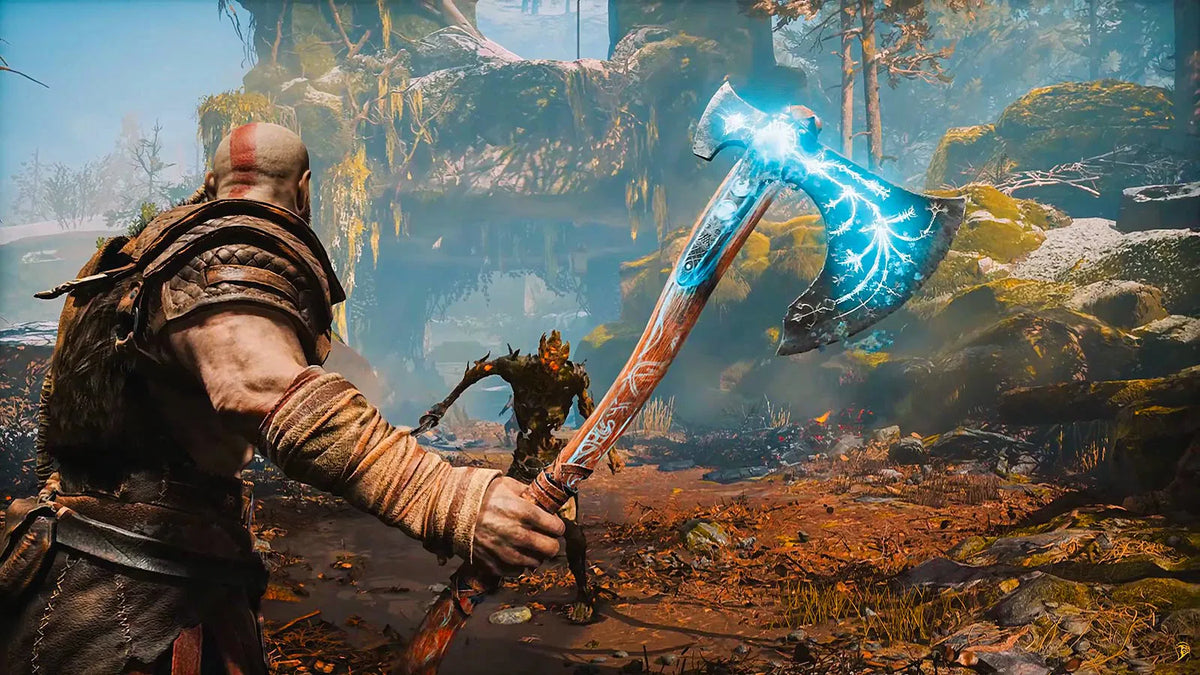
The Leviathan Axe was forged by Brok and Sindri for Faye, Kratos's late wife, and is imbued with powerful frost magic. It was designed to be the equal of Thor's Mjolnir, it carries deep emotional weight for Kratos, and the God of War Leviathan Axe lore connects it to some of the most important threads in the Norse saga.
When God of War relaunched in 2018 with a new setting and a new version of Kratos, players expected something different. What they did not fully anticipate was how much of that difference would come from a single weapon. The Leviathan Axe did not just replace the Blades of Chaos as Kratos's primary tool. It became a symbol of the man he was trying to become and the life he had built in the Norse realms.
The God of War Leviathan Axe lore runs deeper than most players realize on a first playthrough. The weapon has a history that predates Kratos himself, a connection to some of the most powerful figures in Norse mythology, and an emotional resonance tied directly to loss and legacy. Understanding where the axe came from changes how the entire story lands.
This is the full story behind Kratos's most iconic weapon, from its creation to what it represents by the time the credits roll on Ragnarok.
What Is the Leviathan Axe?
The Leviathan Axe is a magical Norse weapon infused with the power of ice and frost. In combat it functions as both a melee weapon and a ranged tool, with Kratos throwing it across distances and recalling it to his hand at will, the way Thor commands Mjolnir. That comparison is not accidental. The two weapons share a history, a set of creators, and a mythological rivalry that runs through both God of War games.
The name itself carries meaning. Leviathan is a word rooted in ancient mythology, typically used to describe a massive sea creature of overwhelming power. In the context of Norse mythology, that imagery connects naturally to the cold, deep waters of the northern world and to creatures like Jormungandr, the World Serpent. The weapon's frost enchantments, its scale, and its sheer presence in the story all fit the name well.
The year God of War relaunched on PS4, introducing the Leviathan Axe to players worldwide and going on to win over 180 Game of the Year awards. The axe became one of the most recognized weapons in gaming almost immediately.
What separates the Leviathan Axe from most weapons in gaming is that it is not just a gameplay tool. It is a narrative object. Every major character who sees it reacts to it in some way. Brok and Sindri feel pride and grief over it. Jormungandr recognizes something in Kratos when he sees the axe. And for Atreus, it is a physical link to his mother. The weapon is doing storytelling work in nearly every scene it appears in.
Who Made the Leviathan Axe?
The axe was forged by the Huldra Brothers, Brok and Sindri, two dwarven blacksmiths who are considered the finest craftspeople in all the Nine Realms. The two brothers are central figures in both God of War games, appearing throughout the story as quest givers, vendors, and eventually as characters with their own emotional arcs. Their relationship to the Leviathan Axe gives them weight from the moment they first appear.
Brok and Sindri
The brothers were also the ones who forged Mjolnir, Thor's hammer. That detail is important because it establishes the Leviathan Axe as a deliberate counterpart to Thor's weapon. Where Mjolnir channels lightning and heat, the Leviathan Axe channels frost and cold. Where Mjolnir is associated with destruction and power for its own sake, the Leviathan Axe was made for someone who used strength with purpose. The brothers poured everything they had into both weapons, and both represent the peak of what dwarven craftsmanship could achieve.
After the axe passes to Kratos, the brothers' reactions to seeing it again reveal how much it still means to them. Brok in particular has a complicated relationship with the weapon, which ties into the larger mystery around their shared history and the falling out that drove them apart before the events of the game.
Faye's Connection to the Axe
Before it belonged to Kratos, the Leviathan Axe was made for Faye, his wife and Atreus's mother, who had died before the events of the game begin. Faye, known in Norse mythology as Laufey, was a giant of immense power who had chosen to live among mortals and build a quiet life with Kratos in the Norse wilderness. The axe was created specifically for her, and the frost enchantments it carries reflect her nature and her connection to the cold magic of the giants.
When Kratos takes up the axe after her death, it becomes a reminder of her. He does not speak about Faye easily. He carries grief the way he carries everything, quietly and with enormous weight. But the axe is always there, connecting him to her even when he cannot find the words. That is the God of War Leviathan Axe lore operating at its most effective: using an object to say things a character cannot say out loud.
The Leviathan Axe and Jormungandr
One of the stranger threads in the God of War Leviathan Axe lore involves Jormungandr, the World Serpent. When Kratos and Atreus first encounter the serpent at the Lake of Nine, Jormungandr reacts to Kratos with something that resembles recognition, despite the two never having met. The game's eventual explanation for this reaches into the mechanics of time in the Norse world.
During the prophesied battle of Ragnarok, it is written that Thor and Jormungandr will destroy each other. The force of their clash is so immense that it sends the serpent backward through time, to an era before the current cycle of the world even began. This means that by the time Kratos arrives in the Norse realms, Jormungandr has already lived through a future version of events involving Kratos and those connected to him. The axe, forged as the counterpart to Mjolnir, is part of that thread.
The axe was never just a weapon. It was a choice. Kratos picked it up knowing it came from his wife, knowing the brothers who made it, knowing what it stood for. Every time he throws it and calls it back, that choice is visible.
Why the Leviathan Axe Replaced the Blades of Chaos
The Blades of Chaos are Kratos's original weapons, the ones bound to his arms by Ares, the weapons that defined his identity as the Ghost of Sparta. They represent everything from his past that he is trying to move beyond when the Norse saga begins. The rage, the servitude, the destruction carried out in the name of a god who manipulated him. Picking up the Leviathan Axe instead of the Blades was a statement about who Kratos wanted to be.
The Blades of Chaos return in the 2018 game, but the moment they come back is deliberate. Kratos retrieves them specifically to save Atreus, choosing to pick up the worst parts of his past in service of his son's future. That contrast with the Leviathan Axe makes both weapons more meaningful. The axe is who he chooses to be. The blades are who he was forced to become.
By Ragnarok, Kratos carries both weapons without shame. The game suggests that the version of himself he was trying to escape is not something that needs to be buried. It is part of him, and the question is what he does with it going forward. The Leviathan Axe sits at the center of that arc from start to finish.
The Leviathan Axe in God of War Ragnarok
In Ragnarok, the axe continues to grow alongside Kratos. New enchantments and upgrades expand its capabilities, and the frost magic at its core becomes increasingly central to how players approach combat. But the more interesting development is what happens to the axe's role in the story.
Atreus, who has grown into a young man capable of fighting alongside his father, understands the weapon's history better than he did as a child. He knows it belonged to Faye. He knows what it means. That shared understanding between father and son, carried through the presence of a single object, is one of the quieter but more effective storytelling choices in the sequel.
The God of War Leviathan Axe lore also gets additional context in Ragnarok through revelations about Faye herself and the full scope of what she knew and planned. The axe she left behind turns out to be even more intentional than it appeared, another layer added to a weapon that already carried enormous weight.
Leviathan Axe vs Blades of Chaos
The two weapons that define Kratos are as different from each other as the two versions of the character. Here is how they compare across the details that matter most.
| Detail | Leviathan Axe | Blades of Chaos |
|---|---|---|
| Creator | Brok and Sindri | Ares, God of War |
| Original Owner | Faye (Laufey the Just) | Kratos (bound by Ares) |
| Element | Frost | Fire |
| Mythological Counterpart | Mjolnir | None directly |
| What It Represents | Kratos's chosen identity, Faye's legacy | Kratos's past, his servitude to the gods |
| Combat Style | Precision, throwable, crowd control | Aggressive, sweeping, chain-based |
Frequently Asked Questions
The Leviathan Axe was made for Faye, also known as Laufey the Just, who was Kratos's wife and Atreus's mother. She was a giant who had chosen to live quietly in the Norse wilderness, and the axe was crafted specifically for her by the dwarven brothers Brok and Sindri. After her death, Kratos took up the weapon, and it became one of the most important objects in the God of War Leviathan Axe lore across both games.
The recall ability is an enchantment placed on the axe by Brok and Sindri, the same craftspeople who forged Mjolnir. Both weapons were made to return to their wielder's hand, and the parallel is intentional. The Leviathan Axe was designed from the ground up to be a weapon of equal power and craft to Thor's hammer, which means the two share a number of fundamental properties including the ability to be called back across distance.
The axe represents Kratos's attempt to build a new identity separate from his past as the Ghost of Sparta. It was not a weapon bound to him by a god or taken through conquest. It belonged to someone he loved, and choosing to use it was a choice to move forward rather than remain defined by the Blades of Chaos and everything they represent. Across both games, the axe functions as a symbol of who Kratos is choosing to be rather than who he was forced to become.
The connection is indirect but meaningful. The God of War Leviathan Axe lore ties the weapon to the broader Norse mythology that includes Jormungandr. The World Serpent recognizes Kratos when they first meet, a detail explained by the fact that Jormungandr was sent backward through time after his battle with Thor during Ragnarok. This means he already has some experience with a version of events involving Kratos and the axe, even before the events of the 2018 game take place.
Yes. The Leviathan Axe returns as one of Kratos's primary weapons in Ragnarok and continues to be upgraded throughout the game. The sequel adds new context to the axe's history through revelations about Faye and what she knew and planned before her death. By the end of Ragnarok, the full picture of the God of War Leviathan Axe lore comes together in a way that reframes some of what happened in the first game.
Browse our collection of God of War-inspired replica weapons, including the Leviathan Axe, built for fans who want to bring the Norse saga home.
Shop Replica Weapons →
