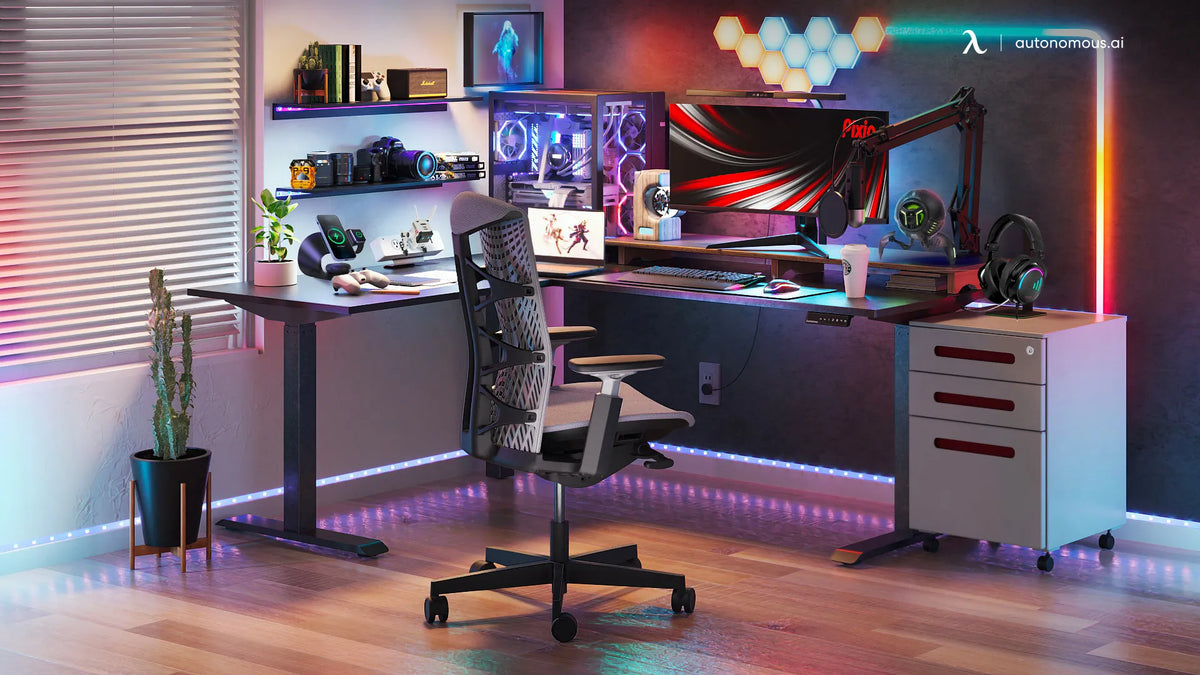
Pick one hero piece and build the rest of the room around it. Mount long weapons on the wall behind your desk, keep smaller collectibles at eye level on floating shelves, add soft directional lighting, and leave breathing room between pieces so nothing competes for attention.
A prop replica looks incredible the moment you unbox it. Then it ends up leaning against a bookshelf or sitting in a corner behind a chair, and the piece you were excited about becomes furniture. That gap between owning something and actually showing it off is where most collections stall out, and it usually has nothing to do with the replica itself.
Learning how to display prop replicas is really about three things: height, light, and space. Get those right and a single sword can carry an entire room. Get them wrong and even a dozen great pieces look like clutter. The good news is that none of it requires a renovation or an expensive display case.
This guide walks through wall mounting, shelf layouts, lighting, grouping, and the small protective habits that keep a collection looking sharp for years. Whether you have one replica or twenty, the same principles apply.
Why Does Placement Matter More Than the Piece Itself?
Your eye follows contrast and negative space. A replica sitting flat against a busy background gets absorbed into it, no matter how detailed the sculpt is. The same replica on a clean wall with two feet of empty space around it reads as intentional, and people notice it the second they walk in.
This matters even more if you stream or record. A camera flattens depth, so anything crowded turns into visual noise on screen. Streamers who figure out how to display prop replicas properly end up with backgrounds that look designed rather than accidental, and they do it with fewer pieces than you would expect.
Standard gallery eye level, measured to the center of the piece. It is the same rule museums use, and it works just as well on a bedroom wall.
How to Display Prop Replicas on a Wall
Wall mounting is the highest impact move available to you, and it is the answer most people are looking for when they ask how to display prop replicas in a small room. Vertical space is usually the only space you have left, and long weapons were basically designed for it.
Choosing the Right Wall
The wall behind your desk is the obvious pick if you record or stream, since it sits in frame constantly. If you do not, the wall you face when you enter the room is the better choice, because that is the first thing anyone sees. Avoid walls that get direct afternoon sun, since UV exposure fades painted finishes faster than anything else in a normal home.
A large blade wants a wall it can own. Something like a Moonlight Greatsword replica reads best mounted alone with clear space on either side, rather than squeezed between a monitor arm and a shelf full of figures.
Mounts That Actually Hold
High density foam replicas are light, which gives you options that steel props never allow. Adhesive sword hangers, small J hooks, and clear acrylic brackets all work fine for foam. For anything heavier or longer than about three feet, find a stud or use a proper drywall anchor rated well above the actual weight.
- Two point mounts for anything long, so the piece cannot pivot or slide
- Felt or foam pads behind contact points to stop wall scuffing
- Horizontal mounting for swords and rifles, angled mounting for axes and hammers
- Clear acrylic hardware when you want the prop to look like it is floating
Angled mounts add energy to a wall but eat more space than people expect. If you are working with a narrow section, keep everything horizontal and stack in even rows. A Halo energy sword mounted flat above a monitor takes up almost no usable wall and still pulls focus.
Shelf and Desk Display Ideas
Not everything belongs on a wall. Helmets, figures, and smaller collectibles look better with depth around them, and shelves give you that. The mistake is treating a shelf like storage. A shelf is a stage, and a stage works best with two or three pieces on it, not nine.
Building Depth on a Shelf
Stagger your pieces front to back instead of lining them up flat. Put the tallest item slightly off center, place a mid height piece in front and to one side, and leave the remaining space empty. That single adjustment does more for a shelf than any amount of extra product. A Space Marine helmet anchoring the back of a shelf with two smaller items stepped down in front is a layout that always works.
Riser blocks help too. A simple acrylic or wooden riser lifts a back row a few inches, which stops taller pieces from hiding smaller ones. Painted wood risers in a neutral tone disappear visually and cost almost nothing.
Desk Level Pieces
Your desk is the closest surface to your face for hours a day, so it deserves pieces you actually want to look at up close. Keep it functional though. Items that do a job earn their footprint, which is why a controller holder beats a random figure sitting in the same spot. Everything else that does not serve a purpose should move up to a shelf where it has room to breathe.
Lighting Turns a Shelf Into a Display
Lighting is the step people skip, and it is the one that separates a room with stuff in it from a room that looks curated. Flat overhead light kills texture. Directional light from the side rakes across a surface and pulls out every panel line, scratch, and weathering pass on the paint.
Stick to warm white or neutral white for the main light on a piece, then use colored RGB as a background wash behind it. Colored light directly on a replica flattens the sculpt and hides detail, which is the opposite of what you want. Puck lights under a shelf lip, a thin LED bar above a wall mount, or a small clip spot aimed at a 45 degree angle all do the job for very little money.
Light the prop in white and light the wall in color. The moment you flip that, your detail disappears and everything turns into a glowing silhouette.
Grouping, Themes, and Knowing When to Stop
Once you own more than a few pieces, layout becomes an editing problem. Grouping by franchise is the easiest approach and it reads clearly to anyone looking at the room. Grouping by silhouette works better visually, since a wall of long blades has a rhythm to it that mixed shapes do not.
Odd numbers look more natural than even numbers. Three pieces on a wall almost always beats four. If you have six replicas and one wall, split them across two zones rather than cramming all six into one grid. Rotating a few pieces into storage and swapping them seasonally keeps the room feeling new without buying anything, and it is one of the more underrated prop replica display ideas out there.
There is also a scale consideration. Massive pieces need distance to be appreciated, so a Storm Ruler sword on the wall you sit closest to will feel overwhelming, while the same piece across the room lands perfectly.
Keeping Your Replicas in Good Shape
Display and preservation pull in opposite directions. Anything out in the open collects dust and takes light exposure. A few habits handle most of it without turning your room into a museum vault.
- Dust with a soft makeup brush or a microfiber cloth, never a damp cloth on painted foam
- Keep pieces out of direct sunlight to prevent fading and warping
- Store foam props flat or fully supported, since long term leaning causes permanent bends
- Avoid mounting above heat sources like radiators or the back of a PC exhaust
- Check adhesive mounts every few months, especially in humid rooms
Which Display Method Should You Use?
Most setups end up using a mix. This is a quick way to decide where a given piece belongs.
| Method | Best For | Watch Out For |
|---|---|---|
| Wall mount | Swords, rifles, axes, long props | Anchor strength and sun exposure |
| Floating shelf | Helmets, figures, mid size pieces | Overcrowding and weight limits |
| Floor stand | Oversized weapons and full armor | Foot traffic and tipping |
| Desk top | Small props and functional pieces | Clutter and accidental knocks |
| Enclosed case | Fragile or high value pieces | Glare on camera and cost |
Mistakes That Undo a Good Setup
Almost every display problem traces back to the same handful of habits. Fixing them costs nothing.
- Hanging everything too high, which flattens the piece and makes it hard to see detail
- Filling every inch of wall and shelf, so nothing has room to stand out
- Lighting props with colored LEDs only, which erases texture and paintwork
- Leaning long weapons in a corner, which puts a permanent curve in the blade
- Mixing wildly different scales on one shelf without risers to balance them
- Ignoring cable management, since visible cords cheapen an otherwise clean wall
Fixing even two or three of those will change how the room feels. Understanding how to display prop replicas is mostly about restraint, and restraint is free.
Building Toward a Room, Not a Pile
Start with one hero piece and give it the best position in the room. Everything you add after that should support it rather than compete with it. That single rule keeps a collection coherent as it grows, and it is the reason some setups with four replicas look better than setups with fifteen.
Take a photo of your setup every time you change something. A camera catches imbalance that your eye adjusts to after a few days, and it is the fastest feedback loop available. Once you get comfortable with how to display prop replicas in your own space, the layout stops being something you fuss over and becomes something you just know.
Frequently Asked Questions
Aim for the center of the piece to sit around 57 to 60 inches from the floor. If the replica hangs above a desk or a couch, keep about 8 to 10 inches of clear space between the furniture and the bottom of the prop.
Yes. High density foam props are light enough for adhesive strips and command style hooks in most cases. Use two contact points for anything long, clean the wall before applying, and give the adhesive a full day to cure before hanging the piece.
Warm or neutral white light aimed at the piece from an angle, with any colored lighting kept on the wall behind it. Side lighting brings out sculpted detail, while flat front lighting washes it out.
Go vertical. Wall mounts and floating shelves use space that furniture cannot, and keeping the floor clear makes the room read as larger. Limit yourself to one focal wall instead of spreading pieces across every surface.
A light dusting every two to three weeks is enough for most rooms. Use a dry soft brush on painted foam and avoid cleaning sprays, since solvents can lift weathering and clear coats.
Browse replica swords, helmets, and props built from high density foam and ready to mount straight out of the box.
Shop All Replicas →

