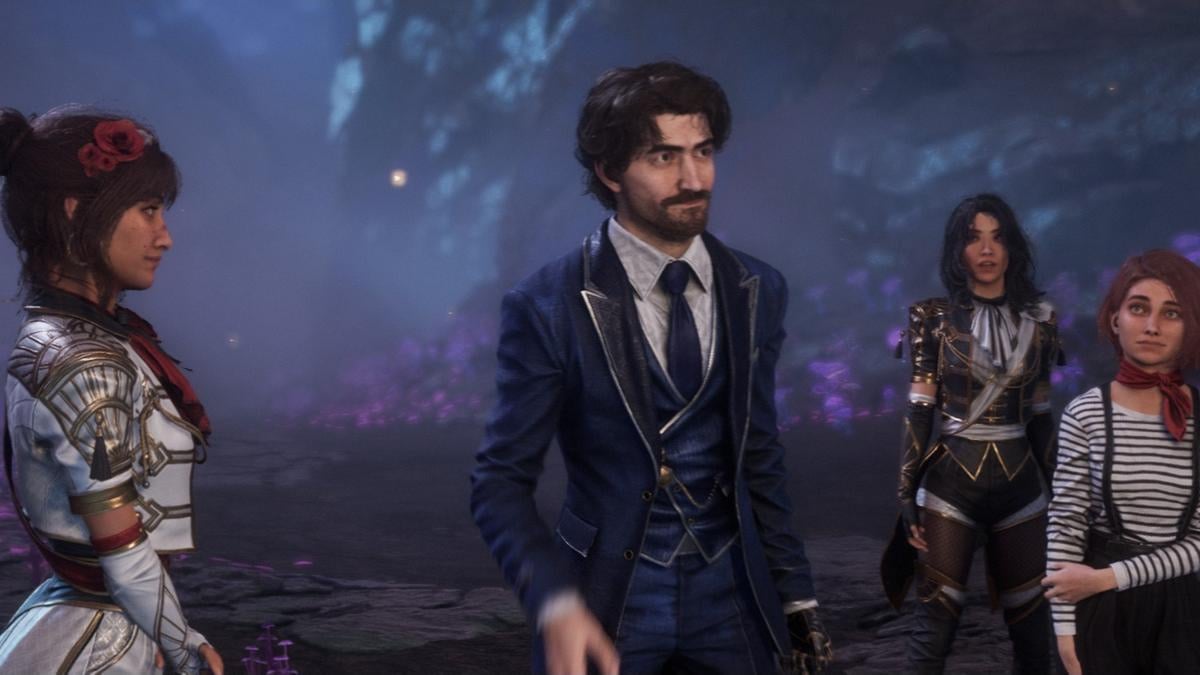
The ending hinges on one final choice: save the painted world by siding with Maelle, or destroy it by siding with Verso. The whole world is a Canvas created by a grieving family, and the two endings represent holding onto that grief or finally letting it go. Maelle's ending keeps the painting alive but traps her in it, while Verso's ending erases the world so the family can heal in reality. Neither is a clean happy ending, and that is the point.
Few games have stuck the landing on an emotional gut-punch quite like this one. The finale takes a story that already had you attached to its cast and asks you to decide whether they get to keep existing at all. It is the kind of ending people argue about for hours, partly because both options hurt and partly because the truth behind the world reframes everything you thought you were fighting for.
This is a complete breakdown, so treat it as a full spoiler warning for the entire campaign. I am going to explain what the world actually is, how the story arrives at its final choice, and exactly what happens in both endings of Clair Obscur: Expedition 33. If you have not finished it yet and want to go in clean, bookmark this and come back. If you have rolled credits and need to process what you just watched, you are in the right place.
What is actually going on in Clair Obscur: Expedition 33?
The single biggest reveal is that the entire world is a Canvas, a painted reality created by the Dessendre family, who are real-world Painters with the power to build worlds inside their art. That Canvas was made by the real Verso Dessendre, a gifted young painter who died in a house fire. The same fire scarred his sister Alicia and left her unable to speak. His death is the wound the whole story grows out of.
After Verso died, his grieving family stepped into the Canvas. His mother, Aline, recreated a version of him inside the painting and began staying longer and longer to be with her lost son, slowly becoming the figure known as the Paintress. His father, Renoir, wanted a normal grieving process and entered the Canvas to erase it and force the family to let go. Their clash created the Fracture, which sank the city of Lumière, raised the Monolith, and set the stage for the Expeditions in the first place.
That context is what makes the cast click into place. Maelle is the painted version of Alicia, and later the real Alicia enters the Canvas and inhabits her. Verso, the swordsman who joins your party, is the preserved soul of the real Verso, who has lived an endless, sorrowful existence inside the world he made. If the expedition's blades are your favorite part, our sword and blade replicas bring that side of the game off the screen.
How does the story reach its ending?
By the final act, the Expedition forces the Paintress out and turns its attention to Renoir, who appears in the climax as the Curator and has to be defeated across three encounters. With Aline pushed out of the Canvas and Renoir beaten, he reluctantly leaves Maelle behind and returns to the real world, leaving the fate of the painting to the two characters who still want opposite things.
Then comes the twist of the knife. Verso tries to step through the gateway to reality to see his mother, but instead ends up in the heart of the Canvas, where he finds the soul of the real Verso as a boy, endlessly painting. He realizes that if the boy stops, both versions of Verso can finally rest. The boy pauses for a moment, and Verso begins to fade, but the child sees Maelle and hurriedly starts painting again. Verso then confronts Maelle, certain she lied about how long she intends to stay, when the truth is she means to stay forever. That sets up the final choice.
The Paintress paints a descending number each year, and everyone of that age and older fades away in the Gommage. The Expedition is the 33rd because the count has fallen to 33, which is the quiet clock ticking under the whole story.
What happens in Maelle's ending?
If you choose to fight as Maelle and save the Canvas, you have to defeat Verso. Maelle keeps the painted world alive, reunites with the friends she has come to love, and chooses to live in Lumière forever. In doing so she becomes the de facto new Paintress, stepping into the exact role she set out to destroy and continuing her mother's cycle of avoidance rather than breaking it.
The epilogue is where this lands as the darker option. In a black-and-white scene, an aged Verso walks to a piano on a stage to perform, with Sciel, Lune, and Maelle watching. Something is wrong with Maelle, though. A painted mask covers part of her face and her right eye is gone, the same merging that consumed Aline after too long in the Canvas. It signals that the real Alicia is dying in reality to keep living in the painting, with Verso bound to keep performing for her. As his fingers come down on the keys, the screen cuts to black.
The game's lead writer described the two endings as a pair, like choosing a favorite child, and said a truly happy ending was never even on the table. Both options are meant to ache.
What happens in Verso's ending?
If you choose to fight as Verso and destroy the Canvas, you defeat Maelle instead. With her gone, Alicia is erased from the painting and her consciousness returns to the real world. The painted Verso gives the little Verso the okay to finally stop painting, which brings the entire world to an end. The party you traveled with, including Monoco, Esquie, Lune, and Sciel, fades away into a drift of scarlet petals, and the soul of the real Verso is at last allowed to rest.
This leads into the epilogue called A Life to Love. At the Dessendre manor, Renoir, Aline, and Alicia stand silently at Verso's grave, with Alicia holding an Esquie doll as a keepsake from the world she lost. The headstone reads "À Jamais Peint Dans Nos Cœurs," which translates to "Forever Painted in Our Hearts." Their other sibling, Clea, arrives with flowers. The family is finally grieving together for real instead of painting over the loss, and Alicia, a Painter herself, is free to choose any life she wants. It is widely read as the good ending, even though saying goodbye is anything but easy.
Which ending is the right one?
There is no objectively correct answer, which is exactly why the choice works. Verso's ending is the one most players treat as the true or healthy conclusion, since it breaks the cycle of grief that warped both the family and the beautiful world Verso created. The cost is losing characters you genuinely care about, and the game does not pretend that is painless.
Maelle's ending is seductive because it lets everyone live, but the epilogue quietly reveals the price. Choosing the painting means choosing the same slow self-erasure that claimed Aline, trading a real future for a perfect fantasy. The two endings are deliberately built as mirror images, one about acceptance and one about avoidance, and the story trusts you to sit with which one you believe in.
| Aspect | Maelle's ending | Verso's ending |
|---|---|---|
| The Canvas | Saved and kept alive | Destroyed for good |
| The painted cast | They get to live on | They fade into petals |
| Alicia | Stays and slowly fades | Returns to the real world |
| The theme | Holding on and avoidance | Letting go and acceptance |
| Common read | The darker, bittersweet path | The good, healing path |
What does the ending really mean?
Strip away the fantasy and the finale is about grief and what people do with it. The Canvas is a metaphor for the way loss can pull a family into a comforting lie, and the choice between Maelle and Verso is really the choice between escaping into that lie or facing the pain and moving forward. The painting was made out of love, but clinging to it does real harm to the living, which is the tension the whole game builds toward.
It is no surprise the ending resonated so widely and helped make the game one of the most celebrated releases of its year. It earns its emotion honestly and refuses an easy out. If the story has you hungry for more deep, character-driven adventures, our Final Fantasy-inspired replicas and Baldur's Gate-inspired replicas are great places to land next, and a gaming hoodie or graphic tee lets you carry the fandom with you.
Frequently Asked Questions
Loved the expedition's iconic weapons? Our sword and blade replicas bring that craftsmanship off the screen and onto your wall.
Shop Sword ReplicasSources
| GamesRadar, Endings and Story Explained | The Canvas truth and the final choice |
| Game Rant, Endings Explained | Maelle's epilogue and the piano scene |
| CBR, The Ending Explained | The Fracture and the Dessendre conflict |
| Sportskeeda, Endings Explained | A Life to Love epilogue details |

