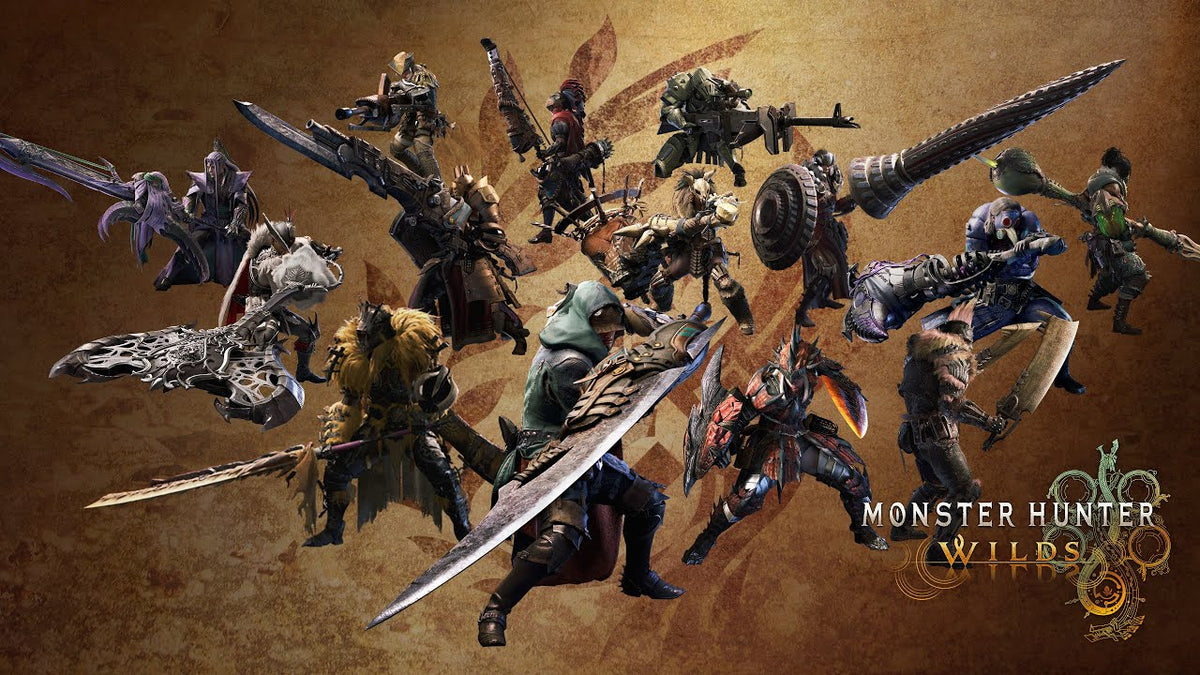
Monster Hunter Wilds has 14 weapon types ranging from beginner-friendly options like the Sword and Shield to high-skill tools like the Charge Blade and Insect Glaive. The best weapon is the one that matches how you want to play. This Monster Hunter Wilds weapons guide breaks down all of them.
Picking your weapon in Monster Hunter Wilds is one of the most important decisions you'll make, and also one of the most daunting. Fourteen weapon types, each with its own moveset, mechanics, positioning requirements, and skill ceiling, stare back at you from the selection screen with no obvious indication of where to start. Getting that choice wrong doesn't ruin the game, but it can lead to hours of frustration before you realize the issue is the weapon, not you.
This Monster Hunter Wilds weapons guide covers all 14 options in plain terms. Each weapon is explained by how it actually plays, who it suits, and what you need to know before committing to it. Whether you're brand new to the franchise or a returning hunter deciding whether to switch things up, this is the resource you need.
There are no bad weapons in Monster Hunter Wilds. Every single one is viable through the full game. The question is which one fits your style.
How to Choose Your Weapon in Monster Hunter Wilds
Before diving into individual weapons, a few principles help narrow things down quickly. Monster Hunter rewards weapon loyalty more than most games. Each weapon has a large enough moveset that mastery takes real time, so picking something and sticking with it pays off more than constantly switching. That said, many veterans run two or three weapons depending on the hunt, so don't feel locked in forever.
Think about positioning first. Do you want to be in the monster's face constantly, or do you prefer creating distance and attacking from range? Melee weapons require you to read monster movements and position around them continuously. Ranged weapons give you more breathing room but reward understanding shot types and ammo management. Neither is easier in an absolute sense, just different.
Complexity is the other major variable. Some weapons in this Monster Hunter Wilds weapons guide play almost entirely as advertised from the first hunt. Others have layered mechanics that only reveal themselves after dozens of hours of practice. Neither type is better, but knowing which category your chosen weapon falls into sets realistic expectations early.
Monster Hunter Wilds features 14 distinct weapon types, each with a fully developed moveset, unique mechanics, and its own approach to every hunt. No two play alike.
Melee Weapons: Beginner to Intermediate
These weapons are strong entry points into Monster Hunter Wilds without demanding heavy mechanical investment upfront.
Sword and Shield
The Sword and Shield is the most beginner-accessible weapon in this Monster Hunter Wilds weapons guide, but calling it a beginner weapon undersells it badly. It's one of the most technically complete weapons in the game. You can use items without sheathing, which is unique to this weapon type and makes it invaluable in hunts where healing on the fly matters. Its combo chains are quick and satisfying, and its shield allows for repositioning under attacks that would interrupt other weapons entirely. Experienced players push Sword and Shield to surprising damage output while maintaining constant mobility.
Dual Blades
Dual Blades deliver the fastest attack tempo of any melee weapon and excel at applying elemental damage consistently. The trade-off is stamina management: Demon Mode, which boosts your output significantly, drains stamina quickly and needs to be rationed across a hunt. For players who enjoy constant aggressive pressure and like to feel like they're overwhelming a monster with sheer speed, Dual Blades deliver that better than anything else in this Monster Hunter Wilds weapons guide.
Long Sword
The Long Sword is consistently one of the most popular weapons across the Monster Hunter franchise and for good reason. Its Spirit Gauge mechanic, where successful hits build a resource that powers stronger combo finishers, creates a satisfying loop that rewards staying aggressive. The Foresight Slash counter lets skilled players punish monster attacks by timing a dodge into an attack, which feels exceptional when it clicks. Long reach and fluid animations make it one of the more cinematic weapons to use, which likely explains its enduring popularity.
Hammer
The Hammer is the primary tool for stunning monsters in Monster Hunter Wilds. Hits to a monster's head build stun, and a stunned monster is one of the best opportunities in the game for the whole party to deal free damage. The Hammer has no cutting capability and no shield, so positioning is entirely up to you. Charge attacks deal the heaviest hits and require reading monster movement to land on target. Players who enjoy a more methodical, high-impact playstyle tend to gravitate toward the Hammer and stay there.
Melee Weapons: High Complexity
These weapons have higher floors to clear before they feel effective, but reward mastery with some of the most satisfying gameplay in Monster Hunter Wilds.
Great Sword
The Great Sword hits harder per swing than any other weapon in this Monster Hunter Wilds weapons guide. A fully charged True Charged Slash landing on a monster's weak point deals damage numbers that dwarf most other weapon types. The catch is that the Great Sword is slow. Every committed attack is a significant investment, and missing a charged swing against a moving monster is punishing. Hunters who invest time in reading monster patterns and identifying safe windows for charged attacks find it one of the most rewarding weapons in the game.
Charge Blade
The Charge Blade is widely considered the most mechanically complex weapon in Monster Hunter and it earns that reputation. It functions as a sword and shield in one mode and transforms into a powerful axe in another. Managing phials, knowing when to charge your shield, when to switch modes, and when to deploy Savage Axe or SAED attacks requires genuine investment to understand. Players who put in that time describe the Charge Blade as one of the most satisfying weapons in the game. Players who don't often walk away confused. It rewards research and practice more than any other entry in this Monster Hunter Wilds weapons guide.
Switch Axe
The Switch Axe transforms between axe and sword mode, with sword mode enabling a powerful Zero Sum Discharge that latches onto a monster and deals sustained burst damage. It has a fluid, aggressive feel that rewards constant pressure and good timing on mode switches. Less mechanically demanding than the Charge Blade but more involved than straightforward options, the Switch Axe sits comfortably in the middle ground for hunters who want depth without the steepest possible learning curve.
Insect Glaive
The Insect Glaive is the only weapon that grants full aerial freedom in Monster Hunter Wilds, letting hunters vault into the air and attack from above without needing a specific setup. Managing your Kinsect, the companion insect that harvests buffs from monsters, adds a layer of resource management on top of the core combat. When all three extract buffs are active, the Insect Glaive becomes extremely potent. Maintaining that uptime while staying mobile in the air is the core challenge of mastering it.
Every weapon in Monster Hunter Wilds has a dedicated community of hunters who swear by it. The best weapon is always the one you've taken the time to actually learn.
Ranged Weapons
Ranged weapons play fundamentally differently from melee options and are worth considering if you prefer managing distance and ammo over close-quarters positioning.
Bow
The Bow is the most mobile ranged weapon in this Monster Hunter Wilds weapons guide and plays almost like a melee weapon in terms of positioning demands. Critical Distance, the optimal range for maximum damage, keeps you relatively close to the monster, and Dash Dancing between shots while managing coatings gives the Bow a high skill ceiling that dedicated players find deeply rewarding. Stamina management is the main resource to track and it takes time to learn how to sustain output across a full hunt.
Light Bowgun
The Light Bowgun is the most mobile of the two gun options and typically specializes in rapid fire ammo types that deal high sustained damage from a safe distance. Different bowgun models support different ammo specializations, so choosing the right weapon for your preferred ammo type is part of the build process. It's a strong option for players who want genuine ranged play without the slower pace of the Heavy Bowgun.
Heavy Bowgun
The Heavy Bowgun gives up mobility for raw firepower. Special ammo types like Wyvern Ammo deal enormous burst damage and the ability to set up a Wyvernheart or Wyvernsnipe creates memorable moments in hunts when timed correctly. It's slower to reposition than other ranged weapons, which means reading monster movement becomes more important. Hunters who enjoy methodical play and want the highest impact ranged option will find a lot to like here.
Support and Unique Playstyle Weapons
Hunting Horn
The Hunting Horn is the team support weapon of Monster Hunter Wilds, capable of playing melodies that provide buffs to the entire party including attack boosts, stamina recovery, and elemental resistance. In Wilds, the Hunting Horn has been significantly reworked to feel more aggressive and self-sufficient than in previous entries. Playing one well means managing your melody queue while still dealing meaningful damage, making it a strong hybrid option for players who want to contribute to the team in a different way.
Lance
The Lance is the most defensive weapon in this Monster Hunter Wilds weapons guide. Its large shield blocks the majority of attacks in the game and its counter mechanics reward players who can read incoming hits and respond precisely. It has the longest reach of any melee weapon, which combined with constant blocking makes it uniquely capable of staying planted on a monster's weak point and grinding out damage through attacks that would send other weapons flying. It's a deliberate, methodical weapon that suits hunters with patience.
Gunlance
The Gunlance combines the defensive stance of the Lance with an integrated cannon that fires shells dealing fixed damage regardless of monster defenses. This makes it particularly effective against highly resistant monsters and gives it a unique damage profile that doesn't scale with monster weaknesses in the traditional way. Managing shell capacity, choosing between Full Burst, Charged Shell, and Wyrmstake Cannon options, and deciding when to reload adds enough decision-making to keep experienced hunters engaged across long hunts.
Monster Hunter Wilds Weapons at a Glance
| Weapon | Type | Difficulty | Best For |
|---|---|---|---|
| Sword and Shield | Melee | Beginner | All-around flexibility |
| Dual Blades | Melee | Beginner | Fast elemental damage |
| Long Sword | Melee | Intermediate | Counter and combo play |
| Hammer | Melee | Intermediate | Stunning and KO damage |
| Great Sword | Melee | Intermediate | Maximum single-hit damage |
| Switch Axe | Melee | Intermediate | Aggressive burst damage |
| Charge Blade | Melee | Advanced | Complex phial-based mechanics |
| Insect Glaive | Melee | Advanced | Aerial combat and mobility |
| Lance | Melee | Intermediate | Defense and sustained poke |
| Gunlance | Melee | Intermediate | Fixed shell damage and burst |
| Hunting Horn | Melee | Intermediate | Team buffs and support |
| Bow | Ranged | Intermediate | Mobile ranged with coatings |
| Light Bowgun | Ranged | Beginner | Rapid fire at range |
| Heavy Bowgun | Ranged | Intermediate | High burst, slow positioning |
Frequently Asked Questions
The Sword and Shield and the Long Sword are the most recommended starting points in any Monster Hunter Wilds weapons guide. The Sword and Shield teaches you the fundamentals without punishing you heavily for mistakes. The Long Sword is slightly more involved but its animations and combos make the game feel great to play early on, which helps new hunters stay engaged while they're still learning.
Yes. You can freely switch weapons between hunts and many experienced players maintain builds for two or three weapon types depending on the target. Each weapon has its own upgrade tree and requires its own set of crafted gear to optimize, so branching out requires investment. That said, there's no penalty for using multiple weapons and it's a common way to keep the game fresh over hundreds of hours.
Damage output in Monster Hunter Wilds depends heavily on build, skill investment, and player execution. The Great Sword has the highest individual hit damage in the game, while weapons like Dual Blades and Charge Blade can achieve very high sustained damage per second with the right setup. No single weapon dominates in all situations, which is by design.
Yes, but come prepared to invest time. The Charge Blade has one of the steepest learning curves of any weapon in this Monster Hunter Wilds weapons guide, but players who commit to it consistently describe it as one of the most rewarding weapons in the game. Spending time in the training area understanding phial charging and mode transitions before taking it on hunts makes the learning process significantly less frustrating.
Every weapon type contributes meaningfully in multiplayer and there are no strict role requirements like in traditional MMOs. That said, having a Hunting Horn player in the party provides buffs that help everyone, and a Hammer hunter focusing on the head creates stun opportunities the whole group benefits from. Broadly speaking, use whatever weapon you enjoy and communicate with your team about positioning around the monster.
Browse our gaming collection and find something worthy of a seasoned hunter.
Shop Now →
